An early spring five day trip to Fuerteventura, one of the eastern Canary Islands and located just 60 miles offshore from Africa, flying from Leeds-Bradford. Excluding travel and bad weather (heavy rain from lunchtime onwards on the final full day), just under three days available in the field - daylight hours were 7.00am to 7.00pm. With accommodation in Tindaya, spent the entire visit focussed solely on the northern part of the island. Distances covered were relatively small - didn't travel more than 15 miles from Tindaya as the crow flies (obviously longer distances by road), with the bulk of the photos taken within just a few miles of the village. Los Molinos Reservoir had water and with a flush of colour to the land, the island had probably experienced some reasonable amounts of rainfall recently.
Fuerteventura, along with Lazarote, are the drier of the Canary Islands and give the chance to see semi-desert species that would otherwise be available in North Africa. Traffic away from Puerto del Rosario and the airport, was very light - a fair bit of time spent driving off-road on tracks. Temperatures were generally pleasant, rising to the early or mid-20's during the afternoon.
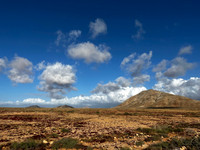
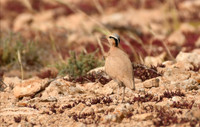
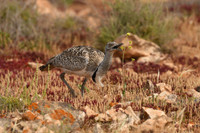
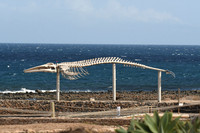
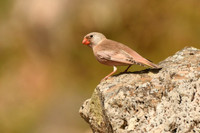
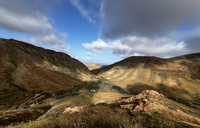
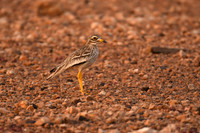
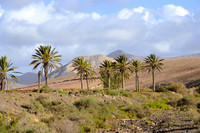
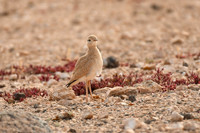
Always prefer trips that cover a variety of habitats and this one did - those visited included desert, scrubby dry river beds, the coast and mountains. Some species took a bit of finding, searching the desert tracks initially felt like looking for a needle in a haystack, but eventually the birds do appear - the first morning managed to photograph both African Houbara Bustard and Cream-coloured Courser, the main targets of the visit, within a couple of hours. Saw virtually everything I hoped to see, the only omissions (apart from the introduced exotics of Red-vented Bulbul and Monk Parakeet present on the south of the island) were Barbary Falcon, Barbary Dove and Canary.
Fuerteventura, along with Lazarote, are the drier of the Canary Islands and give the chance to see semi-desert species that would otherwise be available in North Africa. Traffic away from Puerto del Rosario and the airport, was very light - a fair bit of time spent driving off-road on tracks. Temperatures were generally pleasant, rising to the early or mid-20's during the afternoon.
Always prefer trips that cover a variety of habitats and this one did - those visited included desert, scrubby dry river beds, the coast and mountains. Some species took a bit of finding, searching the desert tracks initially felt like looking for a needle in a haystack, but eventually the birds do appear - the first morning managed to photograph both African Houbara Bustard and Cream-coloured Courser, the main targets of the visit, within a couple of hours. Saw virtually everything I hoped to see, the only omissions (apart from the introduced exotics of Red-vented Bulbul and Monk Parakeet present on the south of the island) were Barbary Falcon, Barbary Dove and Canary.
© East Ayton Photography